What's wrong with WhatsApp
In
the spring, as the virus swept across the world and billions of people
were compelled to stay at home, the popularity of one social media app rose more sharply
than any other. By late March, usage of WhatsApp around the world had
grown by 40%. In Spain, where the lockdown was particularly strict, it
rose by 76%. In those early months, WhatsApp – which hovers neatly
between the space of email, Facebook and SMS, allowing text messages,
links and photos to be shared between groups – was a prime conduit
through which waves of news, memes and mass anxiety travelled.
At first, many of the new uses were heartening. Mutual aid groups
sprung up to help the vulnerable. Families and friends used the app to
stay close, sharing their fears and concerns in real time. Yet by
mid-April, the role that WhatsApp was playing in the pandemic looked
somewhat darker. A conspiracy theory about the rollout of 5G, which
originated long before Covid-19 had appeared, now claimed that mobile
phone masts were responsible for the disease. Across the UK, people
began setting fire to 5G masts, with 20 arson attacks over the Easter weekend alone.
WhatsApp, along with Facebook and YouTube, was a key channel through which the conspiracy theory proliferated. Some feared
that the very same community groups created during March were now
accelerating the spread of the 5G conspiracy theory. Meanwhile, the app
was also enabling the spread of fake audio clips, such as a widely
shared recording in which someone who claimed to work for the NHS
reported that ambulances would no longer be sent to assist people with
breathing difficulties.
This was not the first
time that WhatsApp has been embroiled in controversy. While the “fake
news” scandals surrounding the 2016 electoral upsets in the UK and US
were more focused upon Facebook – which owns WhatsApp – subsequent
electoral victories for Jair Bolsonaro
in Brazil and Narendra Modi in India were aided by incendiary WhatsApp
messaging, exploiting the vast reach of the app in these countries. In
India, there have also been reports of riots and at least 30 deaths
linked to rumours circulating on WhatsApp. India’s Ministry of
Information and Broadcasting has sought ways of regulating WhatsApp
content, though this has led to new controversies about government
infringement on civil liberties.

As
ever, there is a risk of pinning too much blame for complex political
crises on an inert technology. WhatsApp has also taken some steps to
limit its use as a vehicle for misinformation. In March, a WhatsApp
spokesperson told the Washington Post
that the company had “engaged health ministries around the world to
provide simple ways for citizens to receive accurate information about
the virus”. But even away from such visible disruptions, WhatsApp does
seem to be an unusually effective vehicle for sowing distrust in public
institutions and processes.
A WhatsApp group
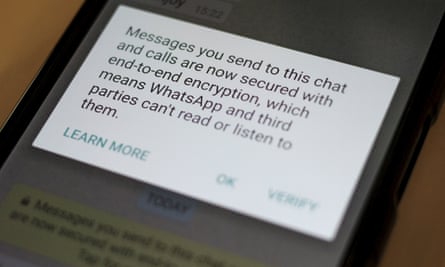
can exist without anyone outside the group knowing of its existence, who
its members are or what is being shared, while end-to-end encryption
makes it immune to surveillance. Back in Britain’s pre-Covid-19 days,
when Brexit and Jeremy Corbyn were the issues that provoked the most
feverish political discussions, speculation and paranoia swirled around
such groups. Media commentators who defended Corbyn were often accused
of belonging to a WhatsApp group of “outriders”, co-ordinated by
Corbyn’s office, which supposedly told them what line to take.
Meanwhile, the Conservative party’s pro-Brexit European Research Group
was said to be chiefly sustained in the form of a WhatsApp group, whose
membership was never public. Secretive coordination – both real and
imagined – does not strengthen confidence in democracy.
WhatsApp
groups can not only breed suspicion among the public, but also
manufacture a mood of suspicion among their own participants. As also
demonstrated by closed Facebook groups, discontents – not always
well-founded – accumulate in private before boiling over in public. The
capacity to circulate misinformation and allegations is becoming greater
than the capacity to resolve them.
The
political threat of WhatsApp is the flipside of its psychological
appeal. Unlike so many other social media platforms, WhatsApp is built
to secure privacy. On the plus side, this means intimacy with those we
care about and an ability to speak freely; on the negative side, it
injects an ethos of secrecy and suspicion into the public sphere. As
Facebook, Twitter and Instagram become increasingly theatrical – every
gesture geared to impress an audience or deflect criticism – WhatsApp
has become a sanctuary from a confusing and untrustworthy world, where
users can speak more frankly. As trust in groups grows, so it is
withdrawn from public institutions and officials. A new common sense
develops, founded on instinctive suspicion towards the world beyond the
group.
The ongoing rise of WhatsApp, and its
challenge to both legacy institutions and open social media, poses a
profound political question: how do public institutions and discussions
retain legitimacy and trust once people are organised into closed and
invisible communities? The risk is that a vicious circle ensues, in
which private groups circulate ever more information and disinformation
to discredit public officials and public information, and our alienation
from democracy escalates.
When WhatsApp was bought by Facebook in 2014 for $19bn,
it was the most valuable tech acquisition in history. At the time,
WhatsApp brought 450 million users with it. In February this year, it
hit 2 billion
users worldwide – and that is even before its lockdown surge – making
it by far the most widely used messenger app, and the second most
commonly used app after Facebook itself. In many countries, it is now
the default means of digital communication and social coordination,
especially among younger people.
The
features that would later allow WhatsApp to become a conduit for
conspiracy theory and political conflict were ones never integral to
SMS, and have more in common with email: the creation of groups and the
ability to forward messages. The ability to forward messages from one
group to another – recently limited
in response to Covid-19-related misinformation – makes for a potent
informational weapon. Groups were initially limited in size to 100
people, but this was later increased to 256. That’s small enough to feel
exclusive, but if 256 people forward a message on to another 256
people, 65,536 will have received it.
Groups
originate for all sorts of purposes – a party, organising amateur sport,
a shared interest – but then take on a life of their own. There can be
an anarchic playfulness about this, as a group takes on its own set of
in-jokes and traditions. In a New York Magazine piece last year, under
the headline “Group chats are making the internet fun again”,
the technology critic Max Read argued that groups have become “an
outright replacement for the defining mode of social organization of the
past decade: the platform-centric, feed-based social network.”
It’s
understandable that in order to relax, users need to know they’re not
being overheard – though there is a less playful side to this. If groups
are perceived as a place to say what you really think, away from the
constraints of public judgement or “political correctness”, then it
follows that they are also where people turn to share prejudices or more
hateful expressions, that are unacceptable (or even illegal) elsewhere.
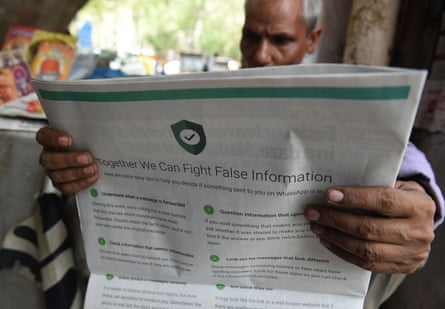
Santiago Abascal, the leader of the Spanish far-right party Vox, has
defined his party as one willing to “defend what Spaniards say on
WhatsApp”.
A
different type of group emerges where its members are all users of the
same service, such as a school, a housing block or a training programme.
A potential problem here is one of negative solidarity, in which
feelings of community are deepened by turning against the service in
question. Groups of this sort typically start from a desire to pool
information – students staying in touch about deadlines, say – but can
swiftly become a means of discrediting the institution they cluster
around. Initial murmurs of dissatisfaction can escalate rapidly, until
the group has forged an identity around a spirit of resentment and
alienation, which can then be impossible to dislodge with countervailing
evidence.
Faced with the rise of new
technologies, one option for formal organisations and associations is to
follow people to their preferred platform. In March, the government
introduced a WhatsApp-based information service
about Covid-19, with an automated chatbot. But groups themselves can be
an unreliable means of getting crucial information to people. Anecdotal
evidence from local political organisers and trade union reps suggests
that, despite the initial efficiency of WhatsApp groups, their workload
often increases because of the escalating number of sub-communities,
each of which needs to be contacted separately. Schools desperately seek
to get information out to parents, only to discover that unless it
appears in precisely the right WhatsApp group, it doesn’t register. The
age of the message board, be it physical or digital, where information
can be posted once for anyone who needs it, is over.
WhatsApp’s
‘broadcast list’ function, which allows messages to be sent to multiple
recipients who are invisible to one another (like email’s ‘bcc’ line),
alleviates some of the problems of groups taking on a life of their own.
But even then, lists can only include people who are already mutual
contacts of the list-owner. The problem, from the point of view of
institutions, is that WhatsApp use seems fuelled by a preference for
informal, private communication as such. University lecturers are
frequently baffled by the discovery that many students and applicants
don’t read email. If email is going into decline, WhatsApp does not seem
to be a viable alternative when it comes to sharing verified
information as widely and inclusively as possible.
Groups
are great for brief bursts of humour or frustration, but, by their very
nature, far less useful for supporting the circulation of public
information. To understand why this is the case, we have to think about
the way in which individuals can become swayed and influenced once they
belong to a group.
The
internet has brought with it its own litany of social pathologies and
threats. Trolling, flaming, doxing, cancelling and pile-ons are all
risks that go with socialising within a vast open architecture. “Open”
platforms such as Twitter are reminders that much social activity tends
to be aimed at a small and select community, but can be rendered comical
or shameful when exposed to a different community altogether.
As
any frequent user of WhatsApp or a closed Facebook group will
recognise, the moral anxiety associated with groups is rather different.
If the worry in an open network is of being judged by some outside
observer, be it one’s boss or an extended family member, in a closed
group it is of saying something that goes against the codes that anchor
the group’s identity. Groups can rapidly become dominated by a certain
tone or worldview that is uncomfortable to challenge and nigh-impossible
to dislodge. WhatsApp is a machine for generating feelings of faux pas,
as comments linger in a group’s feed, waiting for a response.
This
means that while groups can generate high levels of solidarity, which
can in principle be put to powerful political effect, it also becomes
harder to express disagreement within the group. If, for example, an
outspoken and popular member of a neighbourhood WhatsApp group begins to
circulate misinformation about health risks, the general urge to
maintain solidarity means that their messages are likely to be met with
approval and thanks. When a claim or piece of content shows up in a
group, there may be many members who view it as dubious; the question is
whether they have the confidence to say as much. Meanwhile, the less
sceptical can simply forward it on. It’s not hard, then, to understand
why WhatsApp is a powerful distributor of “fake news” and conspiracy
theories.
As on open social platforms, one of
the chief ways of building solidarity on WhatsApp is to posit some
injustice or enemy that threatens the group and its members. In the most
acute examples, conspiracy theories are unleashed against political
opponents, to the effect that they are paedophiles or secret affiliates
of foreign powers. Such plausibly deniable practices swirled around the
fringes of the successful election campaigns of Modi, Bolsonaro and
Donald Trump, and across multiple platforms.
But
what makes WhatsApp potentially more dangerous than public social media
are the higher levels of trust and honesty that are often present in
private groups. It is a truism that nobody is as happy as they appear on
Facebook, as attractive as they appear on Instagram or as angry as they
appear on Twitter, which spawns a growing weariness with such endless
performance. By contrast, closed groups are where people take off their
public masks and let their critical guard down. Neither anonymity (a
precondition of most trolling) nor celebrity are on offer. The speed
with which rumours circulate on WhatsApp is partly a reflection of how
altruistic and uncritical people can be in groups. Most of the time,
people seem to share false theories about Covid-19 not with the
intention of doing harm, but precisely out of concern for other group
members. Anti-vaxx,
anti-5G or anti-Hillary rumours combine an identification of an enemy
with a strong internal sense of solidarity. Nevertheless, they add to
the sense that the world is hostile and dangerous.
There
is one particular pattern of a group chat that can manufacture threats
and injustices out of thin air. It tends to start with one participant
speculating that they are being let down or targeted by some institution
or rival group – be it a public service, business or cultural community
– whereupon a second participant agrees. By this stage, it becomes
risky for anyone else to defend the institution or group in question,
and immediately a new enemy and a new resentment is born. Instantly, the
warnings and denunciations emanating from within the group take on a
level of authenticity that cannot be matched by the entity that is now
the object of derision.
But what if the first
contributor has misunderstood or misread something, or had a very
stressful day and needs to let off steam? And what if the second is
merely agreeing so as to make the first one feel better? And what if the
other members are either too distracted, too inhibited or too exhausted
to say anything to oppose this fresh indignation? This needn’t snowball
into the forms of conspiracy theory that produce riots or arson
attacks. But even in milder forms, it makes the job of communicating
official information – occasionally life-saving information – far more
troublesome than it was just a decade ago. Information about public
services and health risks is increasingly having to penetrate a thicket
of overlapping groups, many of which may have developed an instinctive
scepticism to anything emanating from the “mainstream”.
Part
of the challenge for institutions is that there is often a strange
emotional comfort in the shared feeling of alienation and passivity. “We
were never informed about that”, “nobody consulted us”, “we are being
ignored”. These are dominant expressions of our political zeitgeist. As
WhatsApp has become an increasingly common way of encountering
information and news, a vicious circle can ensue: the public world seems
ever more distant, impersonal and fake, and the private group becomes a
space of sympathy and authenticity.
This is a
new twist in the evolution of the social internet. Since the 90s, the
internet has held out a promise of connectivity, openness and inclusion,
only to then confront inevitable threats to privacy, security and
identity. By contrast, groups make people feel secure and anchored, but
also help to fragment civil society into separate cliques, unknown to
one another. This is the outcome of more than 20 years of ideological
battles over what sort of social space the internet should be.
For
a few years at the dawn of the millennium, the O’Reilly Emerging
Technology Conferences (or ETech), were a crucible in which a new
digital world was imagined and debated. Launched by the west coast media
entrepreneur Tim O’Reilly and hosted annually around California, the
conferences attracted a mixture of geeks, gurus, designers and
entrepreneurs, brought together more in a spirit of curiosity than of
commerce. In 2005, O’Reilly coined the term “web 2.0” to describe a new
wave of websites that connected users with each other, rather than with
existing offline institutions. Later that year, the domain name
facebook.com was purchased by a 21-year-old Harvard student, and the age
of the giant social media platforms was born.
Within
this short window of time, we can see competing ideas of what a
desirable online community might look like. The more idealistic tech
gurus who attended ETech insisted that the internet should remain an
open public space, albeit one in which select communities could cluster
for their own particular purposes, such as creating open-source software
projects or Wikipedia entries. The untapped potential of the internet,
they believed, was for greater democracy. But for companies such as
Facebook, the internet presented an opportunity to collect data about
users en masse. The internet’s potential was for greater surveillance.
The rise of the giant platforms from 2005 onwards suggested the latter
view had won out. And yet, in a strange twist, we are now witnessing a
revival of anarchic, self-organising digital groups – only now, in the
hands of Facebook as well. The two competing visions have collided.

To
see how this story unfolded, it’s worth going back to 2003. At the
ETech conference that year, a keynote speech was given by the web
enthusiast and writer Clay Shirky, now an academic at New York
University, which surprised its audience by declaring that the task of
designing successful online communities had little to do with technology
at all. The talk looked back at one of the most fertile periods in the
history of social psychology, and was entitled “A group is its own worst
enemy”.
Shirky drew on the work of the British
psychoanalyst and psychologist Wilfred Bion, who, together with Kurt
Lewin, was one of the pioneers of the study of “group dynamics” in the
40s. The central proposition of this school was that groups possess
psychological properties that exist independently of their individual
members. In groups, people find themselves behaving in ways that they
never would if left to their own devices.
Like Stanley Milgram’s notorious series of experiments
to test obedience in the early 60s – in which some participants were
persuaded to administer apparently painful electric shocks to others –
the mid-20th century concern with group dynamics grew in the shadow of
the political horrors of the 30s and 40s, which had posed grave
questions about how individuals come to abandon their ordinary sense of
morality. Lewin and Bion posited that groups possess distinctive
personalities, which emerge organically through the interaction of their
members, independently of what rules they might have been given, or
what individuals might rationally do alone.
With
the dawn of the 60s, and its more individualistic political hopes,
psychologists’ interest in groups started to wane. The assumption that
individuals are governed by conformity fell by the wayside. When Shirky
introduced Bion’s work at the O’Reilly conference in 2003, he was going
out on a limb. What he correctly saw was that, in the absence of any
explicit structures or rules, online communities were battling against
many of the disruptive dynamics that fascinated the psychologists of the
40s.
Shirky highlighted one area of Bion’s
work in particular: how groups can spontaneously sabotage their own
stipulated purpose. The beauty of early online communities, such as
listservs, message boards and wikis, was their spirit of egalitarianism,
humour and informality. But these same properties often worked against
them when it came to actually getting anything constructive done, and
could sometimes snowball into something obstructive or angry. Once the
mood of a group was diverted towards jokes, disruption or hostility
towards another group, it became very difficult to wrest it back.
Bion’s
concerns originated in fear of humanity’s darker impulses, but the
vision Shirky was putting to his audience that day was a more optimistic
one. If the designers of online spaces could preempt disruptive “group
dynamics”, he argued, then it might be possible to support cohesive,
productive online communities that remained open and useful at the same
time. Like a well designed park or street, a well-designed online space
might nurture healthy sociability without the need for policing,
surveillance or closure to outsiders. Between one extreme of anarchic
chaos (constant trolling), and another of strict moderation and
regulation of discussion (acceding to an authority figure), thinking in
terms of group dynamics held out the promise of a social web that was
still largely self-organising, but also relatively orderly.
But
there was another solution to this same problem waiting in the wings,
which would turn out to be world-changing in its consequences: forget
group dynamics, and focus on reputation dynamics instead. If someone
online has a certain set of offline attributes, such as a job title, an
album of tagged photos, a list of friends and an email address, they
will behave themselves in ways that are appropriate to all of these
fixed public identifiers. Add more and more surveillance into the mix,
both by one’s peers and by corporations, and the problem of spontaneous
group dynamics disappears. It is easier to hold on to your self-control
and your conscience if you are publicly visible, including to friends,
extended family and colleagues.
For many of the
Californian pioneers of cyberculture, who cherished online communities
as an escape from the values and constraints of capitalist society,
Zuckerberg’s triumph represents an unmitigated defeat. Corporations were
never meant to seize control of this space. As late as 2005, the hope
was that the social web would be built around democratic principles and
bottom-up communities. Facebook abandoned all of that, by simply turning
the internet into a multimedia telephone directory.
The
last ETech was held in 2009. Within a decade, Facebook was being
accused of pushing liberal democracy to the brink and even destroying
truth itself. But as the demands of social media have become more
onerous, with each of us curating a profile and projecting an identity,
the lure of the autonomous group has resurfaced once again. In some
respects, Shirky’s optimistic concern has now become today’s pessimistic
one. Partly thanks to WhatsApp, the unmoderated, self-governing, amoral
collective – larger than a conversation, smaller than a public – has
become a dominant and disruptive political force in our society, much as
figures such as Bion and Lewin feared.
Conspiracy
theories and paranoid group dynamics were features of political life
long before WhatsApp arrived. It makes no sense to blame the app for
their existence, any more than it makes sense to blame Facebook for
Brexit. But by considering the types of behaviour and social structures
that technologies enable and enhance, we get a better sense of some of
society’s characteristics and ailments. What are the general tendencies
that WhatsApp helps to accelerate?
First
of all, there is the problem of conspiracies in general. WhatsApp is
certainly an unbeatable conduit for circulating conspiracy theories,
but we must also admit that it seems to be an excellent tool for
facilitating genuinely conspiratorial behaviour. One of the great
difficulties when considering conspiracy theories in today’s world is
that, regardless of WhatsApp, some conspiracies turn out to be true:
consider Libor-fixing, phone-hacking, or efforts
by Labour party officials to thwart Jeremy Corbyn’s electoral
prospects. These all happened, but one would have sounded like a
conspiracy theorist to suggest them until they were later confirmed by
evidence.
A communication medium that connects
groups of up to 256 people, without any public visibility, operating via
the phones in their pockets, is by its very nature, well-suited to
supporting secrecy. Obviously not every group chat counts as a
“conspiracy”. But it makes the question of how society coheres, who is
associated with whom, into a matter of speculation – something that
involves a trace of conspiracy theory. In that sense, WhatsApp is not
just a channel for the circulation of conspiracy theories, but offers
content for them as well. The medium is the message.
The
full political potential of WhatsApp has not been witnessed in the UK.
To date, it has not served as an effective political campaigning tool,
partly because users seem reluctant
to join large groups with people they don’t know. However, the
influence – imagined or real – of WhatsApp groups within Westminster and
the media undoubtedly contributes to the deepening sense that public
life is a sham, behind which lurk invisible networks through which power
is coordinated. WhatsApp has become a kind of “backstage” of public
life, where it is assumed people articulate what they really think and
believe in secret. This is a sensibility that has long fuelled
conspiracy theories, especially antisemitic ones. Invisible WhatsApp
groups now offer a modern update to the type of “explanation” that once
revolved around Masonic lodges or the Rothschilds.
Away
from the world of party politics and news media, there is the prospect
of a society organised as a tapestry of overlapping cliques, each with
their own internal norms. Groups are less likely to encourage heterodoxy
or risk-taking, and more likely to inculcate conformity, albeit often
to a set of norms hostile to those of the “mainstream”, whether that be
the media, politics or professional public servants simply doing their
jobs. In the safety of the group, it becomes possible to have one’s cake
and eat it, to be simultaneously radical and orthodox, hyper-sceptical
and yet unreflective.
For all the benefits that
WhatsApp offers in helping people feel close to others, its rapid
ascendency is one further sign of how a common public world – based upon
verified facts and recognised procedures – is disintegrating.
WhatsApp is well equipped to support communications on the margins of
institutions and public discussion: backbenchers plotting coups, parents
gossipping about teachers, friends sharing edgy memes, journalists
circulating rumours, family members forwarding on unofficial medical
advice. A society that only speaks honestly on the margins like this
will find it harder to sustain the legitimacy of experts, officials and
representatives who, by definition, operate in the spotlight. Meanwhile,
distrust, alienation and conspiracy theories become the norm, chipping
away at the institutions that might hold us together.
• Follow the Long Read on Twitter at @gdnlongread, and sign up to the long read weekly email here


Comments
Post a Comment