Racism has been the grinding backdrop to my life. Is a different future now possible?
Racism has been the grinding backdrop to my life. Is a different future now possible?
As a mixed-race child growing up in a London suburb, signs of change were brief but exhilarating. Today I feel that jolt again
Last
week I was reminded of something important: one of the most meaningful
moments of my early life was walking into the newspaper shop where I
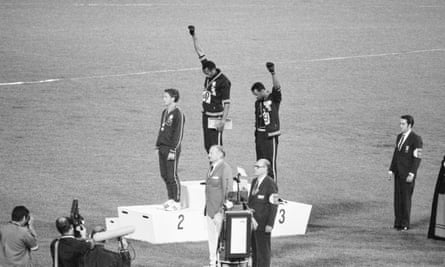
worked as a paperboy – this was in the white London suburb where I grew up as a mixed-race kid – and seeing the image of Tommie Smith and John Carlos making the black power salute at the 1968 Olympics.
I am still learning about racism – but I know a history-changing moment when I see one
Suzanne Moore

For
a while I’d been trying to work out, on my own, in my head, and with a
few books, what exactly it meant to be a child of empire. It hadn’t been
going well; I was more than confused. So I remember almost staggering
as I experienced a surge of exhilaration and pride at the sight of the
two raised fists. I didn’t enjoy feeling strongly – there was a lot that
people like me had to endure every day, so it was better to be
bloodless – but I was overwhelmed.
Maybe, I
thought, this is it: our time is coming. We will be recognised. Your
face will not always be your fate. There will be resistance and change.
I
was mumbling something about how moving the photograph was, when my
employer, the shopkeeper, said, “Why have these people – including that
Cassius Clay – involved politics in sport? Can’t sport just be sport?
They should leave it right out.”
I’d like to
say I responded appropriately, or, rather, inappropriately, but I
wouldn’t have been able to say much, saving my many thoughts for
writing, the only place I could speak freely. But I was certainly aware
that in April of that year, in Birmingham, Enoch Powell had made his
infamous “rivers of blood” speech, which had, to say the least, a considerable impact on the lives of people of colour.
I
was reminded of the photograph of Smith and Carlos when I saw something
equally notable, disruptive and carnivalesque: footage of the
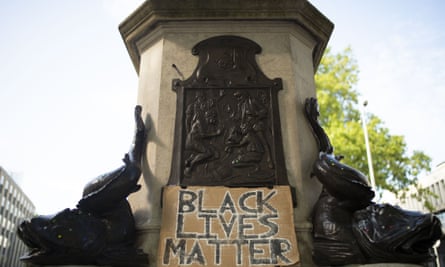
18th-century slave-owner Edward Colston’s statue being hurled into Bristol harbour
by dozens of young, mostly millennial, anti-racists, cheering and
dancing as the bronze effigy was drowned. Two of my children went to
university in Bristol; they had to walk past that statue of a slaver on
the way to class. Now they ask, why did it have to be there at all? And
that is indeed a question worth asking about everything like that, over
and over. What is it doing, what does it say, and, more importantly,
what are we doing today?
I grew up in the world
colonialism made, and I was taught to be ashamed of where we came from.
My father, brought up in British India, used to say: we were told by
the white master what a lavish favour they were doing us by colonising
us. While they wouldn’t want to be colonised themselves, they were, in
fact, civilising us – and more: bringing us education, democracy,
trains!
After so long, what a break this insurrection or uprising is. After Brexit, Trump, Orbán, Le Pen and the escalation of fatuous populism
with its scapegoating and persecution of minorities, this celebration
of new voices looks like being our #MeToo moment, a paradigm shift, with
some significant acknowledgement of how unalike the experiences of
black and white people are, and of how traumatic the infliction of
racism is. And of what a pleasure it is to inflict such a trauma on
others.
What is usually left out of accounts of
racism is the enjoyment it gives to those dishing it out – that hit of
power and privilege, so easily obtained, telling the other who is boss,
who would want to give that up? My father and his family, who came to
the west, were soon aware that the white master wanted it both ways, to
use immigrant labour to build their economy, and to enjoy their share of
colonialism – racism. To do that, we had to stay in our assigned place
and acknowledge that nothing is deeper than skin. But that is over.
Racism has been the grinding backdrop to my life. Is a different future now possible?
As a mixed-race child growing up in a London suburb, signs of change were brief but exhilarating. Today I feel that jolt again
Last
week I was reminded of something important: one of the most meaningful
moments of my early life was walking into the newspaper shop where I
worked as a paperboy – this was in the white London suburb where I grew up as a mixed-race kid – and seeing the image of Tommie Smith and John Carlos making the black power salute at the 1968 Olympics.
I am still learning about racism – but I know a history-changing moment when I see one
Suzanne Moore
For
a while I’d been trying to work out, on my own, in my head, and with a
few books, what exactly it meant to be a child of empire. It hadn’t been
going well; I was more than confused. So I remember almost staggering
as I experienced a surge of exhilaration and pride at the sight of the
two raised fists. I didn’t enjoy feeling strongly – there was a lot that
people like me had to endure every day, so it was better to be
bloodless – but I was overwhelmed.
Maybe, I
thought, this is it: our time is coming. We will be recognised. Your
face will not always be your fate. There will be resistance and change.
I
was mumbling something about how moving the photograph was, when my
employer, the shopkeeper, said, “Why have these people – including that
Cassius Clay – involved politics in sport? Can’t sport just be sport?
They should leave it right out.”
I’d like to
say I responded appropriately, or, rather, inappropriately, but I
wouldn’t have been able to say much, saving my many thoughts for
writing, the only place I could speak freely. But I was certainly aware
that in April of that year, in Birmingham, Enoch Powell had made his
infamous “rivers of blood” speech, which had, to say the least, a considerable impact on the lives of people of colour.
I
was reminded of the photograph of Smith and Carlos when I saw something
equally notable, disruptive and carnivalesque: footage of the
18th-century slave-owner Edward Colston’s statue being hurled into Bristol harbour
by dozens of young, mostly millennial, anti-racists, cheering and
dancing as the bronze effigy was drowned. Two of my children went to
university in Bristol; they had to walk past that statue of a slaver on
the way to class. Now they ask, why did it have to be there at all? And
that is indeed a question worth asking about everything like that, over
and over. What is it doing, what does it say, and, more importantly,
what are we doing today?
I grew up in the world
colonialism made, and I was taught to be ashamed of where we came from.
My father, brought up in British India, used to say: we were told by
the white master what a lavish favour they were doing us by colonising
us. While they wouldn’t want to be colonised themselves, they were, in
fact, civilising us – and more: bringing us education, democracy,
trains!
After so long, what a break this insurrection or uprising is. After Brexit, Trump, Orbán, Le Pen and the escalation of fatuous populism
with its scapegoating and persecution of minorities, this celebration
of new voices looks like being our #MeToo moment, a paradigm shift, with
some significant acknowledgement of how unalike the experiences of
black and white people are, and of how traumatic the infliction of
racism is. And of what a pleasure it is to inflict such a trauma on
others.
What is usually left out of accounts of
racism is the enjoyment it gives to those dishing it out – that hit of
power and privilege, so easily obtained, telling the other who is boss,
who would want to give that up? My father and his family, who came to
the west, were soon aware that the white master wanted it both ways, to
use immigrant labour to build their economy, and to enjoy their share of
colonialism – racism. To do that, we had to stay in our assigned place
and acknowledge that nothing is deeper than skin. But that is over.
This raises an important question about merit. The wonderful US writer Flannery O’Connor knew she didn’t like black people, and when she met one, she liked to wonder if she’d like them if they were white. (She didn’t like the idea of James Baldwin, black- or white-skinned.)
When
I was younger and a bit bored in film, theatre or publishing meetings,
I’d sometimes conduct a thought experiment comparable to O’Connor’s: if
these white people were of colour, would they ever get through this
door? Would they be in this position? In this building at all?
The
truth is that white people must be afraid. In their hearts they know it
is only class, race and privilege keeping a lot of them in position. In
a real competition these mediocrities would get nowhere. In a
meritocracy they’d be sweeping the floor, as the immigrants do, if they
were lucky.
This is strange, because isn’t
capitalism supposed to be an ideology of individual liberation? We
compete; our lives are projects; we could be entrepreneurs, reinventing
ourselves for the market. Yet the ruling class use racism to shy away
from real competition because they know it would relegate them.
Sometimes
one is tempted to give up on the world, and dismiss it as a hopeless
thing that can never be improved, but then something comes along to lift
the heart, so that pessimism looks like another form of cynicism.
It
takes a lot of effort to make the future. One or even several
demonstrations will not achieve that. The effect will be cumulative.
Some things are now impossible, and other things have become possible.
And so this moment of economic breakdown and capitalistic stagnation,
when neo-liberalism is destroying the very ground on which it is built,
is an opportunity.
It was unforgettable, the
faces of all of those young people, no longer only puppets of the
market, fighting injustice and making the future. If they ask what we
want, say: only the future.
otograph: Matthew Horwood/Getty Images
This raises an important question about merit. The wonderful US writer Flannery O’Connor knew she didn’t like black people, and when she met one, she liked to wonder if she’d like them if they were white. (She didn’t like the idea of James Baldwin, black- or white-skinned.)
When
I was younger and a bit bored in film, theatre or publishing meetings,
I’d sometimes conduct a thought experiment comparable to O’Connor’s: if
these white people were of colour, would they ever get through this
door? Would they be in this position? In this building at all?
The
truth is that white people must be afraid. In their hearts they know it
is only class, race and privilege keeping a lot of them in position. In
a real competition these mediocrities would get nowhere. In a
meritocracy they’d be sweeping the floor, as the immigrants do, if they
were lucky.
This is strange, because isn’t
capitalism supposed to be an ideology of individual liberation? We
compete; our lives are projects; we could be entrepreneurs, reinventing
ourselves for the market. Yet the ruling class use racism to shy away
from real competition because they know it would relegate them.
Sometimes
one is tempted to give up on the world, and dismiss it as a hopeless
thing that can never be improved, but then something comes along to lift
the heart, so that pessimism looks like another form of cynicism.
It
takes a lot of effort to make the future. One or even several
demonstrations will not achieve that. The effect will be cumulative.
Some things are now impossible, and other things have become possible.
And so this moment of economic breakdown and capitalistic stagnation,
when neo-liberalism is destroying the very ground on which it is built,
is an opportunity.
It was unforgettable, the
faces of all of those young people, no longer only puppets of the
market, fighting injustice and making the future. If they ask what we
want, say: only the future.


Comments
Post a Comment