Gloomy Van Gogh self-portrait in Oslo gallery confirmed authentic
Gloomy Van Gogh self-portrait in Oslo gallery confirmed authentic
This article is more than 5 months old
Only known painting by Dutch master while he had psychosis is ‘unmistakably’ his work
Mark Brown Arts correspondent
Published on Mon 20 Jan 2020 14.58 GMT
After
decades of doubt, a gloomy self-portrait has been authenticated as a
genuine work by Vincent van Gogh and the only known work painted while
he had psychosis.
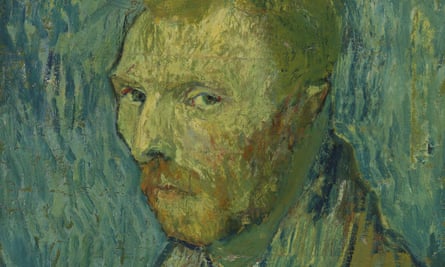
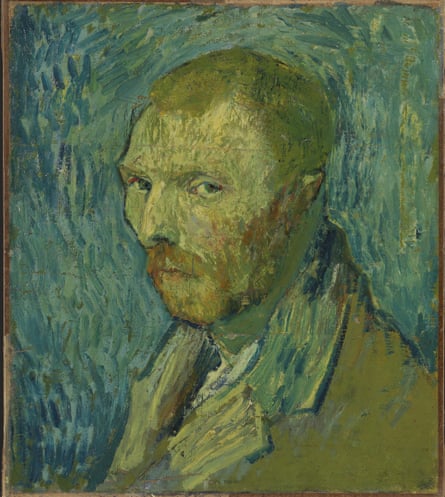
Self-Portrait (1889) has been
in Norway’s national collection since 1910 but its authenticity has
been openly questioned since 1970. On Monday, the Van Gogh Museum in Amsterdam announced it was “unmistakably” a work by the artist.
In
the portrait, dated August 1889, the artist’s expression is lifeless
and the image is dominated by a dreary and downbeat greenish-brown tone.
“The
Oslo self-portrait depicts someone who is mentally ill,” the museum
said. “His timid, sideways glance is easily recognisable and is often
found in patients suffering from depression and psychosis.”
Van
Gogh admitted himself to a small asylum in Saint-Rémy, France, in May
1889 and was struck down by a severe psychotic episode in July that
lasted for a month and a half.
The painting can
be linked to a letter that the artist wrote to his brother Theo in
September, about a self-portrait “attempt from when I was ill”.
Louis van Tilborgh,
a senior researcher at the museum and professor of art history at the
University of Amsterdam, said Van Gogh was frightened to admit he was in
a similar state to other residents at the asylum.
“He
probably painted this portrait to reconcile himself with what he saw in
the mirror: a person he did not wish to be, yet was,” he said.
“This
is part of what makes the painting so remarkable and even therapeutic.
It is the only work that Van Gogh is known for certain to have created
while suffering from psychosis.”
The Nasjonalmuseet in Oslo
purchased the painting in 1910, making it – in theory – the first Van
Gogh self-portrait to enter a public collection. But because of an
incomplete provenance and questions over its style and use of colour,
some experts doubted its authenticity.
The
Nasjonalmuseet asked the Van Gogh Museum to undertake a comprehensive
inspection of its style, technique, material and provenance in 2014, and
it is the results of these investigations that were revealed on Monday.
Mai Britt Guleng, a curator at the Nasjonalmuseet, said it was reassuring the painting had been confirmed as genuine.
“When
we delivered the painting in ‘14 they warned us and said ‘you might not
like the results’ and it might be that we will never find out. So we
were very happy when we got the news.”
One
reason for previous doubts about the work’s authenticity was Van Gogh’s
use of a palette knife to flatten parts of the painting, thought to be
unusual. “It’s not,” said Van Tilborgh. “He uses it often and there is
another picture where he has used it to suppress the liveliness of the
surface, it’s only strange that he has used it for the face.”
Van
Tilborgh believes the artist was trying to deliberately drain the life
from the portrait and that reflected his state of mind. “He attached
much more value to getting something which was intensely expressive,” he
said.
“This is not the best picture that Van
Gogh made but I have grown quite fond of it. He says later on somewhere
that his paintings were sometimes a cry of anguish. Well, this is a cry
of anguish. It belongs to a small group of pictures that show something
of his mental health problem and how he dealt with it, or tried to deal
with it.”
Van Gogh would have been looking in a
mirror as he was painting so the ear in view is his right one, not the
one he famously severed with a razor blade in December 1888. The ear in
the Oslo painting is vague and presumably deliberately so.
Van
Gogh wrote on 22 August 1889 that he was still “disturbed” but felt
able to paint again. The newly authenticated self-portrait was followed
in the following three weeks by two famous and much more vibrant
self-portraits, which are in the National Gallery of Art in Washington DC and the Musée d’Orsay in Paris.
Seen
together, the portraits show a man gradually becoming less fragile,
although it was not to last. Within a year he was dead, aged only 37,
after he shot himself in an apparent suicide.
The
painting is on display at the Van Gogh Museum and will be part of a
temporary exhibition, titled In the Picture, from 21 February. It will
then return to Oslo to be displayed as part of the Nasjonalmuseet’s
permanent collection when a new building opens in spring 2021.


Comments
Post a Comment